How Much Does a Whole-House Generator Cost? The Honest Answer
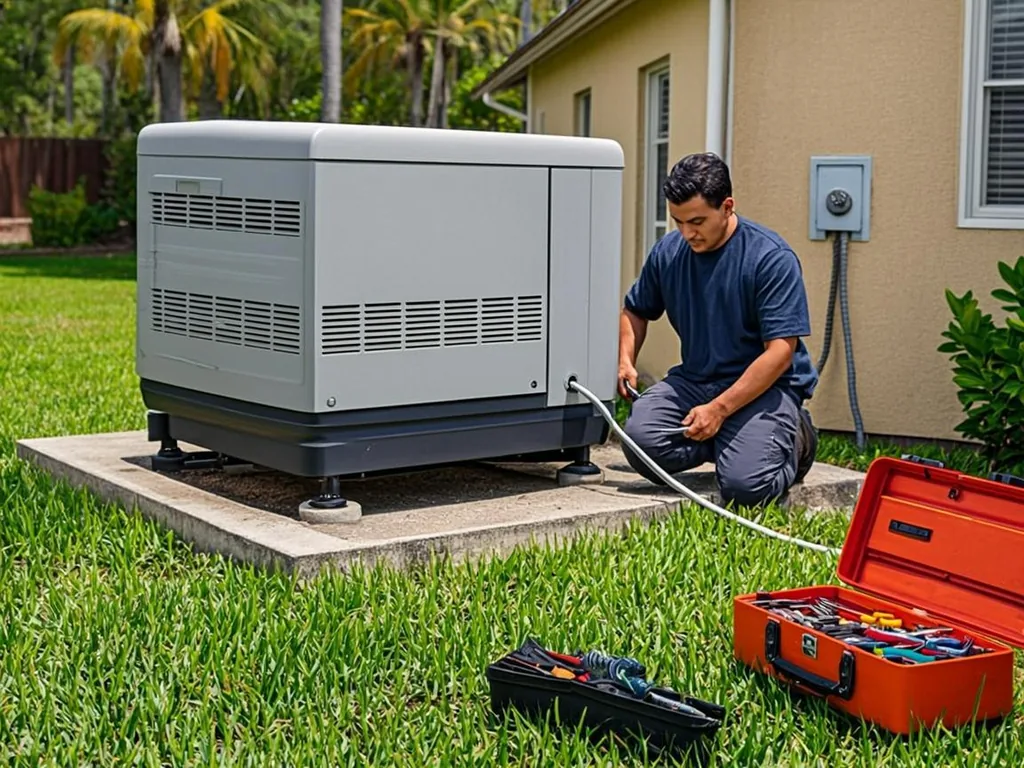
It is the first question every generator conversation gets asked, and the honest answer is a structure rather than a number. Generator pricing swings by region and year, equipment lines change, and no two properties scope identically, which is why our published policy is simple: we do not print prices, and any figure you see pasted across a website deserves suspicion. What we can do, usefully, is show exactly where the money goes, so the quotes you collect can be read line by line instead of absorbed as a lump.
The Equipment: Size Class Comes First
The generator itself is the largest line, and its price follows the size class the home actually needs. That need is arithmetic, not preference: the load calculation totals the circuits the household expects to run during an outage and produces the capacity figure the equipment must meet, the method our generator sizing guide walks through. Larger air-cooled units and the liquid-cooled class above them carry progressively higher equipment cost, which is why an honest calculation matters twice: it prevents both the undersized unit that sheds loads and the oversized unit whose capacity nobody uses.
Fuel Arrangement: Gas Line or Propane Tank
The fuel path carries its own scope. Natural gas installations tie into the home's gas supply, where the service exists and the utility's requirements allow the connection, and the gas side can carry its own permit and coordination. Propane installations add the tank to the project: the tank itself, its placement and clearances on the site plan, and the refill arrangement that keeps it useful through storm season. The trade-offs between the two live in our comparison of natural gas and propane generators; the budget angle is simpler, the fuel decision either adds site work or does not.
The Connection: Transfer Switch vs. Interlock
How the generator joins the house changes the electrical scope. An automatic transfer switch, the standard pairing for whole-house coverage, is installed beside the service equipment and wired to the circuits it protects. An interlock kit, the lower-scope alternative covered in our interlock versus transfer switch guide, pairs with a portable-capable setup and trades automation for simplicity. Whole-house expectations almost always mean a transfer switch, and the circuit selection, whole house versus essential circuits only, is its own cost driver described in our whole house versus essential circuit guide.
Site Work: Pads, Trenching, and Flood Elevation
The ground between the utility connection and the finished unit is where quotes diverge most. A level spot near the service equipment with clean access prices one way; a run that needs trenching, conduit, or a long fuel path prices another. Placement rules shape the options: IRC guidance in our region keeps generators five feet from windows, doors, and intakes, our placement guide explains the full logic, and parcels in mapped flood zones carry elevation requirements above base flood elevation, the discipline documented in our flood-zone generator guide. The pad, its engineering, and the anchoring are part of the site line, and coastal exposure can push material choices further.
Permits, Utility Coordination, and Inspections
Permit fees and inspection requirements are real project costs that vary by jurisdiction, and honest bids carry them as named lines rather than surprises. In Fort Pierce, the generator checklist package, survey, electrical diagram, load sizing, slab drawing, is covered in our permit guide. Where the project touches the service entrance in FPUA territory, the utility's underground-service policy adds coordination, the mechanics explained in our FPUA guide. Gas piping can carry its own permit scope, and the schedule accounts for it from the first estimate.
Ownership After Installation Day
Whole-house ownership continues past the invoice: periodic maintenance at the manufacturer's interval, exercise cycles that quietly self-test, and fuel logistics for propane owners. The habits are modest and documented in our maintenance schedule guide, but a quote comparison should include what ongoing service looks like, because a bargain unit with no local service path ages badly.
How to Compare Generator Estimates Honestly
Collect bids and line them up against this list. Every serious quote names the equipment and its capacity class, the transfer method and the circuits protected, the pad and site work including any trenching or elevation work, the fuel arrangement, the permit handling and inspection sequence, and the warranty and service terms. Missing lines are where surprises live: a bid that omits permits is not cheaper, it is unbilled. Our generator installation service prices this way, itemized to the same categories, because a homeowner who can read the estimate can defend the budget.
The honest answer to "how much": it depends on the house, and the house can be measured. Get the load calculation, walk the site, and the number stops being a guess, it becomes a scope.
Generator Cost Questions
Why don't you publish generator installation prices?
Equipment pricing moves with supply and the region, and no two properties scope identically once site work, fuel paths, and permits are counted. A printed number misleads more often than it informs. We scope each home, itemize the estimate, and the resulting figure reflects the actual project.
What size generator do I need to run my whole house?
The size comes from a load calculation, not a rule of thumb: the circuits the household needs during an outage are totaled with demand factors, and the result sets the capacity class. See our generator sizing guide for the method and the assumptions that keep the number honest.
What is the most budget-conscious way to back up a house?
Covering essential circuits, the refrigerator, a lighting circuit, the well or medical equipment, with appropriately sized equipment costs less than whole-house coverage and keeps the same safety discipline. The comparison is laid out in our whole house versus essential circuits guide.
Want a Number You Can Defend?
Load calculation, site walk, and an itemized estimate, priced to the categories in this guide.