Generator Interlock Kit vs. Transfer Switch: What's the Difference?
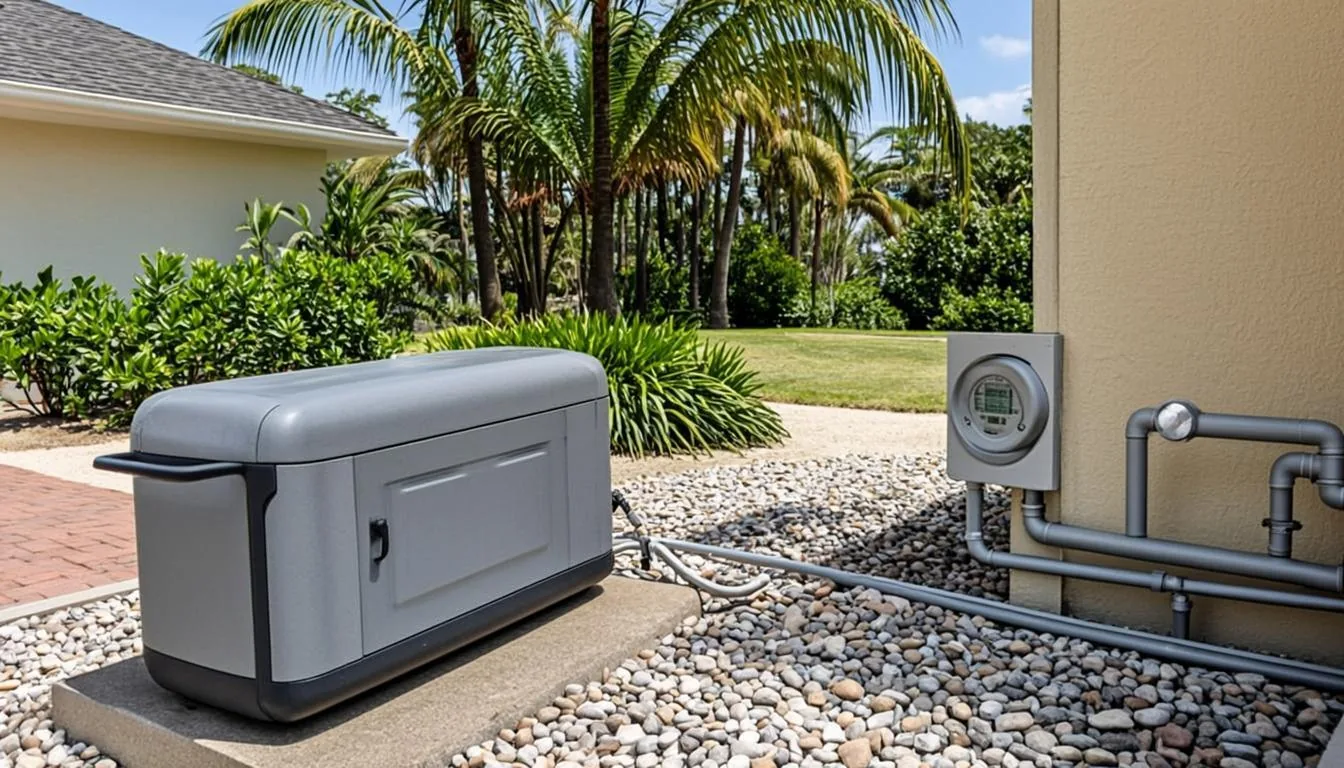
Two households, both running portable generators during the same outage, both connected safely. One selected circuits on a small wall-mounted switch; the other moved breakers in the main panel under a metal plate. The first used a transfer switch; the second used an interlock kit. Both are legitimate, code-recognized connection methods, and choosing between them is mostly about the panel, the generator, and the household's patience. Here is how they differ.
What Is a Generator Interlock Kit?
An interlock kit is a mechanical device mounted on the face of an existing breaker panel. It physically prevents the utility main and the generator breaker from being switched on at the same time: moving one handle to on mechanically blocks the other from leaving off. The generator feeds the panel through a backfed breaker, and the interlock enforces the one rule of generator connections, never two sources at once, with steel instead of electronics.
The kit is listed for specific panel models, installed under permit, and the household then chooses which circuits run by switching their breakers on or off during the outage.
What Is a Generator Transfer Switch?
A transfer switch is a dedicated switching device, separate from the main panel, that moves selected circuits between utility and generator power. Automatic versions do it unattended; manual versions do it with a lever flip. The switch carries its own breaker set for the backed-up circuits, and the household's outage experience is switch-defined: what it feeds is what it powers, always the same list.
How Mechanical Interlocks Work
The interlock's elegance is its simplicity. A sliding plate sits between the two breaker handles, and its geometry makes simultaneous on positions impossible; the plate physically occupies whichever handle would close the second source. No electronics, no sensing, no delay, and no failure mode beyond the plate's own integrity. The code recognizes listed interlocks as an acceptable means of source isolation, which is why they appear in permit-approved installations across Florida.
Comparing Their Electrical Configurations
Equipment Compatibility
Interlocks are panel-specific: kits are listed for particular load-center models, and an older or uncommon panel may simply have no listed kit, which ends the conversation. Transfer switches are panel-agnostic by design; they install beside almost any service, which is why they are the default where the panel is odd, old, or cramped.
Essential Circuit Selection
An interlock feeds the whole panel, and the household selects circuits by toggling breakers during the outage, flexible but hands-on, and bounded by the generator's capacity. A transfer switch feeds a fixed list, decided at installation and hard-wired thereafter, less flexible, and self-enforcing: nobody in the household has to remember which breakers matter.
Manual Operation
Both approaches are manual when paired with portable generators; the difference is where the manual steps happen. Interlock households walk to the panel, flip the main off, the generator breaker on, and then curate circuits. Manual-transfer households flip the switch's levers and are done. Automatic transfer switches, the standby-generator standard, remove the manual step entirely, and interlocks do not apply there.
Installation Requirements
An interlock install is modest: the kit, a generator inlet receptacle at the exterior, a backfed breaker, and the cord route. A transfer switch install adds the switch itself, its enclosure, and the circuit re-wiring that moves the selected circuits into it. Both are permitted and inspected work, and both require the generator's grounding and connection details to be handled correctly.
Can Every Electrical Panel Use an Interlock Kit?
No, and the limits are worth knowing before shopping. The panel must have a listed kit for its model; it must have physical room for the plate and the generator breaker; and its condition must accept the modification safely. Panels with missing or unavailable kits, or with bus or enclosure problems, are not interlock candidates. The verification is part of the estimate, and it is why "just add an interlock" sometimes turns into a different recommendation.
When Is a Transfer Switch the Better Choice?
Four situations favor the switch: the panel has no listed kit; the household wants the outage handled by flipping one lever rather than curating breakers; standby power is planned, which wants automatic switching anyway; or the circuits to back up live on multiple panels. Interlocks win where the listed kit exists, the household is hands-on, and the budget favors the smaller scope, which our transfer switch installation service prices honestly both ways.
Why Professional Installation Matters
Both devices exist to prevent backfeeding, sending generator power onto utility lines, which endangers utility workers and the household alike. The protection only works if the installation is correct: the interlock mechanically sound and listed, the switch wired to the right circuits, the inlet and grounding done per code. This is permit-and-inspection work by definition, and the inspection is the household's proof the isolation is real. For the safety side of portable-generator operation itself, see our guide to connecting a portable generator safely.
Interlock or Transfer Switch?
We check your panel, price both options, and the estimate says which one fits and why.