Breaker Panel Repair in Fort Pierce, FL
Breakers that trip, refuse to reset, or run hot all deserve a proper diagnosis before anyone sells you a new panel. We test the affected circuits, identify the fault, and quote the repair or the replacement based on what the panel inspection actually shows.
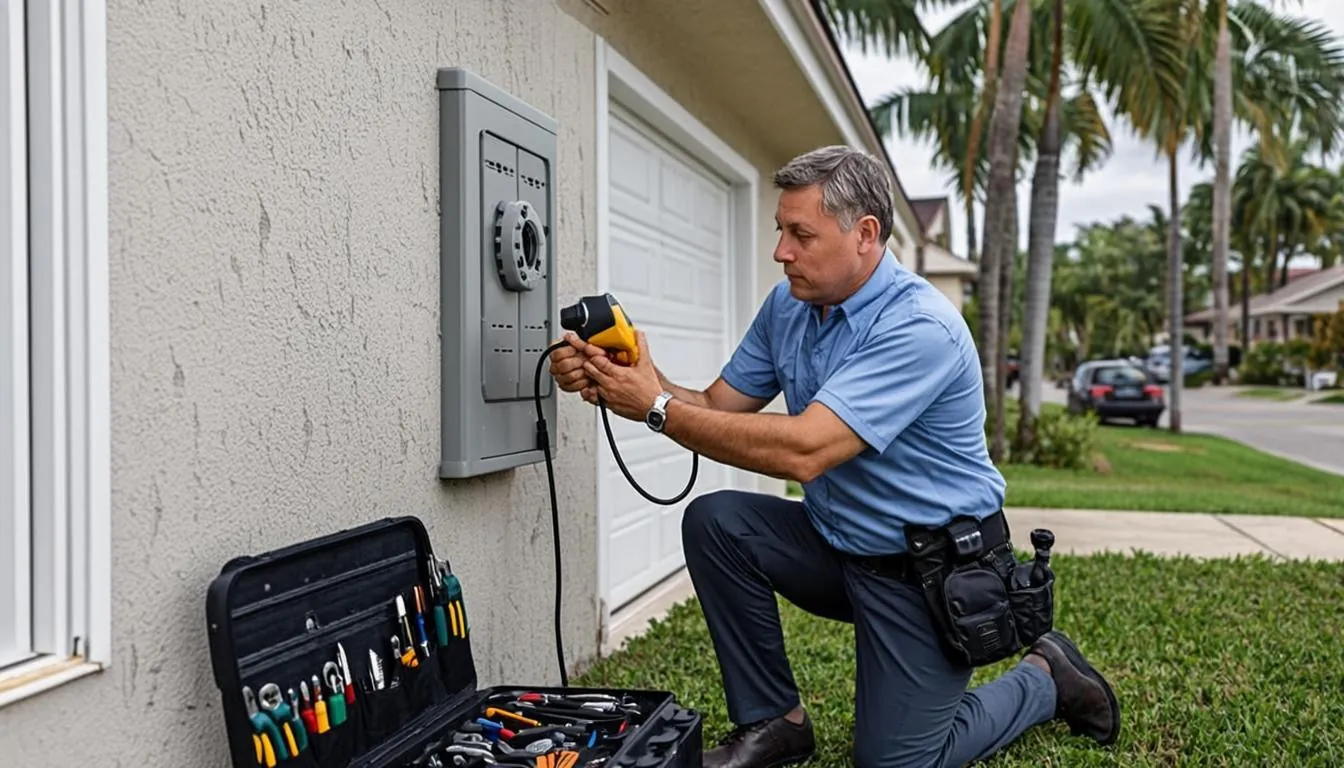
Common Electrical Panel Problems in Fort Pierce Homes
Panel symptoms overlap, and the same complaint can point to different faults. These are the five problem patterns we diagnose most often on repair calls between the river and the western subdivisions.
Circuit Breaker Keeps Tripping
A breaker that trips when the load rises is doing its job until proven otherwise. Overloaded circuits, short circuits, ground faults, and a breaker that has simply worn out all produce trips, and the difference matters: three of those four are wiring conditions, not breaker defects.
Breaker Will Not Reset
When a breaker will not hold the ON position, the circuit behind it still has a fault, or the breaker mechanism itself has failed. Resetting it again and again accomplishes nothing and can mask a live problem. The right sequence is testing the circuit first, then replacing the breaker if the wiring proves sound.
Burning Smell or Unusual Heat Around the Panel
Heat at a breaker, a burning odor near the panel, or discoloration around a terminal all indicate a connection that is failing. Overheated connections damage bus bars, and a loose termination only gets worse under load. Stop using the affected circuits and get the panel inspected; do not remove the panel cover yourself.
Buzzing, Crackling or Visible Panel Damage
Unusual noise from a panel, visible discoloration, rust or corrosion on the enclosure, and signs of moisture intrusion are inspection triggers. Coastal air accelerates corrosion on outdoor and garage-mounted equipment, so Fort Pierce panels deserve a closer look than their inland counterparts.
Partial Power Loss or Dead Circuits
When one or more branch circuits go dark while the rest of the house keeps running, the suspects are the circuit itself, its breaker, or a connection feeding it. A main breaker problem tends to shut down more of the house at once. Circuit testing separates the possibilities without guesswork.
Our Breaker Panel Repair Services
Circuit Breaker Repair and Replacement
Faulty breakers get identified, verified for compatibility with the panel, and replaced with correct parts. After the swap, the branch circuit is tested under load to confirm the repair held, because a new breaker on a damaged circuit just moves the symptom.
Main Breaker Troubleshooting
The main breaker is the hardest-working device in the panel, and its failures affect the whole house. Overheating, mechanical defects, and problems at the service connection each produce different symptoms, and we test for each before recommending anything.
Electrical Panel Connection Repair
Loose terminations, corroded connections, and damaged terminals are repaired with the panel de-energized and verified. Bus bar condition is assessed during the same visit, since a connection repair on a deteriorating bus bar only delays the real fix.
Breaker Panel Troubleshooting
Repeated trips, intermittent circuit failures, and unexplained dead circuits get systematic voltage and circuit testing until the root cause is found. The written estimate that follows states the fault, the fix, and the price, so you can decide with real information.
Why Does Your Circuit Breaker Keep Tripping?
Four failure modes cause nearly every repeat trip. Knowing which one applies tells you whether the fix is a repair, a wiring change, or a capacity conversation.
Overloaded Electrical Circuits
Too many appliances on one branch circuit pushes the total draw past what the breaker allows. Space heaters in winter, hair dryers, and kitchen equipment running together are classic triggers. The lasting fix is redistributing the load or adding a dedicated circuit, not resetting the same breaker every morning.
Short Circuits
Damaged insulation lets current take a shortcut, and the breaker responds instantly with a hard trip that often feels louder than a normal overload. Finding the point where wires touch requires testing and, sometimes, opening sections of the circuit path.
Ground Faults
Current leaking to ground through damaged insulation or moisture trips the protective device the same way a short does. Bathrooms, kitchens, and outdoor circuits in Fort Pierce's humid climate see more of these faults than dry-climate homes do, and ground fault protection devices make the trips more frequent by design.
Worn or Defective Circuit Breakers
Breakers age. Mechanical wear, damaged contacts, and weak internal springs leave a breaker tripping without a real fault, or failing to trip when one exists. Replacement with a compatible part restores proper protection, and we verify compatibility before installing anything.
Electrical Panel Repair vs. Panel Replacement
Repair and replacement are different answers to different conditions, and telling them apart honestly is the core of this service.
When a Breaker Repair May Be Sufficient
A single defective breaker with a serviceable enclosure, healthy bus bars, passing inspection results, and available compatible parts often calls for a straightforward circuit breaker replacement inside the existing equipment: a repair job, not a rebuild. The panel keeps its history, the cost stays proportionate, and the fix addresses the actual fault.
When Your Entire Electrical Panel May Need Replacement
Severe enclosure damage, extensive corrosion or heat damage, a deteriorated bus bar, or obsolete equipment with no compatible parts moves the conversation to full breaker box replacement. When the panel's condition cannot be restored appropriately, pouring repair money into it buys false confidence rather than safety.
When an Electrical Service Upgrade Is Necessary
Sometimes the panel is fine and the capacity behind it is the problem. New equipment demand that exceeds the calculated service capacity calls for an upgrade rather than repairs. If that is the diagnosis, we route you to our electrical panel upgrade services instead of selling repairs that cannot fix a capacity shortfall.
Why Fort Pierce Chooses Us for This Work
Diagnosis First, Parts Second
Every repair visit starts with circuit testing and a panel inspection, so the estimate names the actual fault instead of a hunch. We keep photos of what we find, and you get the findings in writing with the quote. If a contractor has already told you the panel needs replacement, our second opinion costs nothing but the visit.
Around-the-Clock Response for Panel Emergencies
Burning smells, buzzing panels, and dead circuits do not wait for business hours, and our phone lines stay available 24/7 for that reason. Fort Pierce homeowners reach a local electrician rather than a message service, and urgent panel conditions get priority scheduling.
Permit Paperwork Matched to the Repair Scope
Fort Pierce treats electrical repairs differently from panel work: the repair checklist covers service repairs like risers and weatherheads, while the electrical information form carries its own panel repair field. We classify each job correctly so the permit matches the work the inspector will actually see. See the city's permit submittal checklists.
Our Breaker Panel Diagnostic and Repair Process
- Describe the electrical issue. The symptoms and when they started guide where we test first.
- Inspect the panel and affected circuits. Visual inspection, voltage checks, and load testing establish the facts.
- Identify the likely fault. The pattern narrows to an overload, a short, a ground fault, or component failure.
- Determine repair versus replacement. The panel's condition decides whether a repair is honest or cosmetic.
- Provide a written scope and estimate. The fault, the fix, and the price, in writing.
- Perform approved repairs. Work proceeds only on the scope you approved.
- Test the repaired electrical system. Circuits are verified under load before we close out the job.
What Affects the Cost of Breaker Panel Repair?
- Number of breakers involved. One breaker is a part and a visit; several change the scope.
- Type of breaker. Main breakers and specialty or legacy breakers cost more than standard branch units, and compatibility matters.
- Wiring and connection damage. Repairs that reach into circuits or require opening finished walls add labor.
- Bus bar condition. A deteriorating bus bar converts a repair conversation into a replacement conversation.
- Panel manufacturer and compatibility. Some brands and discontinued series require sourcing or force the replacement question.
- Additional circuit troubleshooting. Finding a short or ground fault inside walls takes time proportional to how well the circuit is documented.
- Permits and inspections. Scope-dependent in Fort Pierce, and included in our estimates when they apply.
Our guide to the four causes behind repeated breaker trips walks through the diagnostic logic, and the panel warning signs checklist covers the symptoms that should never wait.
Breaker Panel Repair FAQs
Why does my circuit breaker keep tripping?
Repeated trips come down to four causes: an overloaded circuit, a short circuit, a ground fault, or a breaker that has worn out. The pattern of the trips usually points to which one, and our diagnostic visit confirms it with circuit testing before any parts are replaced.
Can you replace one breaker without replacing the whole panel?
Yes, when the breaker is the isolated problem and the enclosure, bus bars, and remaining components pass inspection. We verify a compatible replacement part exists for your panel brand before quoting the repair.
What does it mean when a breaker will not reset?
A breaker that refuses to stay on is usually protecting the circuit from a live fault, or it has mechanically failed. Either way, forcing it back repeatedly is the wrong move; the circuit needs to be tested before the breaker is replaced.
Is a buzzing electrical panel dangerous?
Buzzing or crackling from a panel deserves immediate attention. The sound often comes from a loose connection or a failing breaker, and those conditions generate heat. Stop using the affected circuits and have the panel inspected promptly.
How do I know whether my electrical panel needs replacement?
Panel replacement enters the conversation when the enclosure is damaged, corrosion has spread, bus bars show heat damage, or the equipment is obsolete enough that compatible parts no longer exist. The inspection result, not the panel's age, makes the call.
Does breaker panel repair require an electrical permit in Fort Pierce?
It depends on the scope. The city publishes an electrical repair checklist aimed at service repairs such as broken risers and weatherheads, while its electrical information form carries a separate panel repair classification. We match the paperwork to the actual repair rather than assuming one form covers everything.
Can an overloaded breaker be fixed without upgrading to 200 amps?
Often yes. If the total service capacity is adequate, the fix may be moving appliances to different circuits or adding a dedicated circuit for the equipment that overloads one line. A load calculation shows which situation applies to your home.
Request Electrical Panel Troubleshooting
Describe the symptom, the panel's location, and when it started. Photos of the panel help us plan the diagnostic visit before we arrive.
Call (772) 217-6642