Whole House Generator vs. Essential Circuit Backup: What's the Difference?
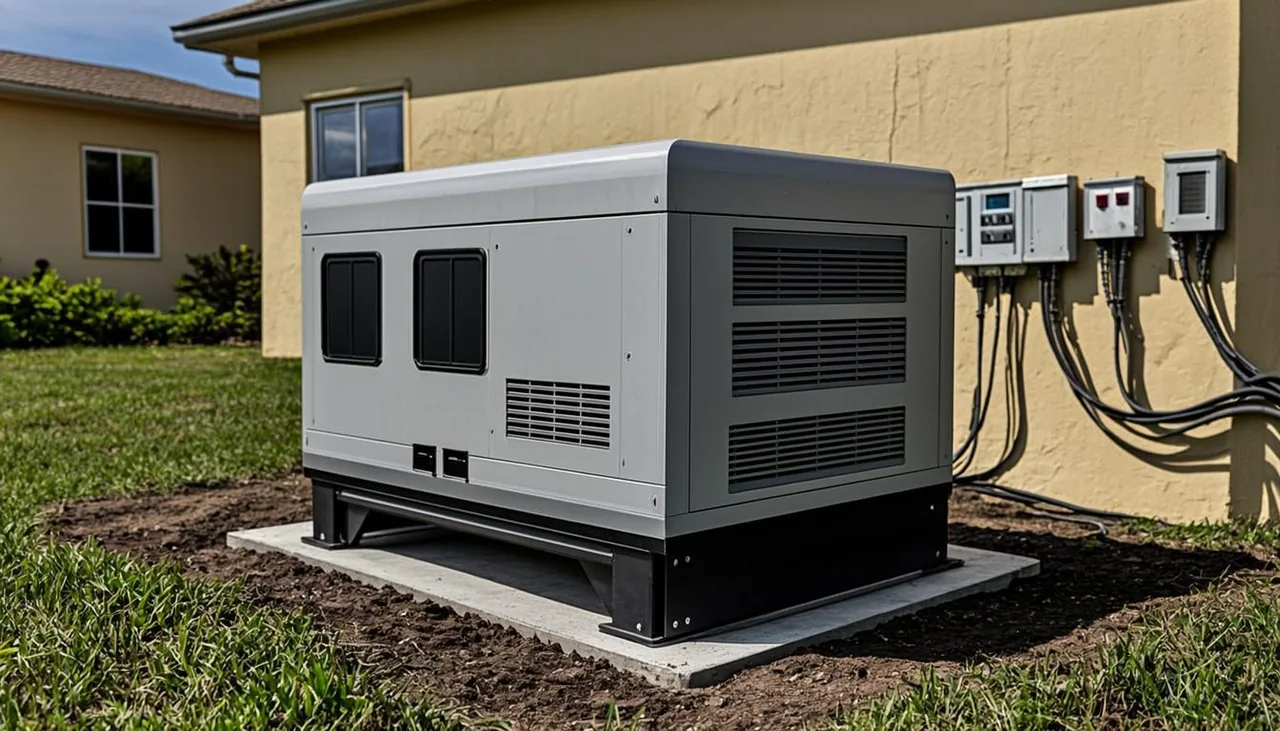
Two homeowners can both say "we have a generator" and mean completely different systems. One flips a switch and the entire house resumes as if nothing happened. The other keeps the refrigerator, the lights, and a few chosen circuits alive while the rest of the panel sits quiet. Neither approach is wrong; they are different answers to the same question, and the right one depends on load, budget, and what an outage actually feels like in your household. Here is how the two configurations differ and how to choose.
What Is a Whole House Generator System?
A whole house system pairs a generator sized to the home's full demand with a service-rated automatic transfer switch, so every circuit in the panel, lights, HVAC, kitchen, laundry, pool pump, is available during an outage. When utility power fails, the transfer switch starts the generator, moves the entire household onto it, and moves everything back when utility service returns.
The defining trait is invisibility. Nobody in the house does anything, gives anything up, or waits for anything. That experience is why whole house is the default answer for larger homes, for households with medical equipment, and for anyone who does not want outage days to be management projects.
What Is an Essential Circuit Backup System?
An essential circuit system, sometimes called partial house backup, pairs the generator with a smaller automatic transfer switch that carries a pre-selected list of circuits: refrigeration, kitchen outlets, selected lighting, the well pump where one exists, maybe one window of air conditioning. Only those circuits move to generator power; the rest of the panel stays disconnected until utility service returns.
The defining trait is selectivity. Somebody decided, in advance and in writing, what matters during an outage, and the system enforces the decision. The generator can be smaller, the transfer switch is smaller, and the fuel consumption drops because the load it feeds is smaller.
Comparing the Two Backup Power Configurations
Generator Capacity
Whole house requires capacity that covers the home's calculated demand, including the HVAC starting surge, which pushes sizing upward. Essential circuit systems size to the selected list only, often allowing a noticeably smaller unit. Capacity is the main cost driver of the equipment, so the configuration decision is largely a capacity decision.
Electrical Load
Whole house feeds everything, including the loads nobody would have chosen to back up. Essential systems feed only the chosen list, and the discipline of choosing tends to improve the plan: households routinely discover that what they actually need during an outage is a short list.
Circuit Selection
Whole house needs no selection; the panel remains the panel. Essential systems require the circuits to be moved or re-fed, either through a separate backup subpanel or through the transfer switch's built-in circuit selection. That wiring work is part of the installation scope and part of the price difference.
Equipment Compatibility
Both configurations use automatic transfer equipment for standby generators, but the switch ratings differ: whole house uses a service-rated switch carrying the full service, while essential systems use a smaller switch rated to the backup list. Matching switch, generator, and panel is exactly the compatibility work our transfer switch installation service handles.
Which Household Equipment Should Be Prioritized?
The standard essential list, refined over many Treasure Coast outage seasons: refrigeration and freezer, because food loss is the first real cost of an outage; kitchen outlets and the microwave, because meals still need making; selected lighting in living areas and halls, because safety; communications and phone charging; the well pump where the property has one; and one room of cooling, usually the bedroom, for Florida's humidity. The water heater, the pool pump, the dryer, and the second guest wing usually wait for utility power without anyone mourning them.
Can an Essential Circuit System Run Central AC?
Yes, with planning. The AC joins the essential list only if the generator capacity covers the compressor's starting surge on top of the rest of the list, which typically moves the sizing up a step. Some installations solve it with load management instead: the system runs the AC only when other heavy circuits are idle. Our guide on standby generators and central AC walks through that arithmetic.
How an Electrician Determines the Right Backup Configuration
The decision procedure is short. Run the load calculation on the whole house. Sit down with the household and mark the circuits that matter during an outage. Price both configurations against those numbers. If the essential list comes close to the whole house in capacity, the whole house system usually wins on simplicity; if the list is genuinely short, the essential system wins on cost and fuel. Either way, the configuration follows the household's documented needs, which is exactly how we scope generator installations.
Frequently Asked Questions
Is a whole house generator worth it for an average Florida home?
For households that ride out storm seasons in place, work from home, or simply do not want to manage outages, most owners answer yes after their first serious hurricane week. For smaller homes with short essential lists, the essential configuration delivers most of the same security for less.
Can I start with essential circuits and upgrade later?
Usually yes, if the transfer equipment and the fuel supply are planned for it at installation. That is a design decision made on day one, not an upgrade bolted on later, so say so at the estimate stage.
Does an essential circuit system need a separate panel?
Not always. Some automatic transfer switches select circuits internally; other installations prefer a dedicated backup subpanel. The panel's layout and the circuit list decide which arrangement is cleaner.
How much smaller can the generator be with essential circuits?
It depends entirely on the list. A household backing up refrigeration, lights, and communications can drop several kilowatts; the same household insisting on central air narrows the gap considerably. The load calculation settles it.
Not Sure Which Configuration Fits Your Home?
We run the numbers for both and put the comparison in writing.