Can a Standby Generator Run Central Air Conditioning?
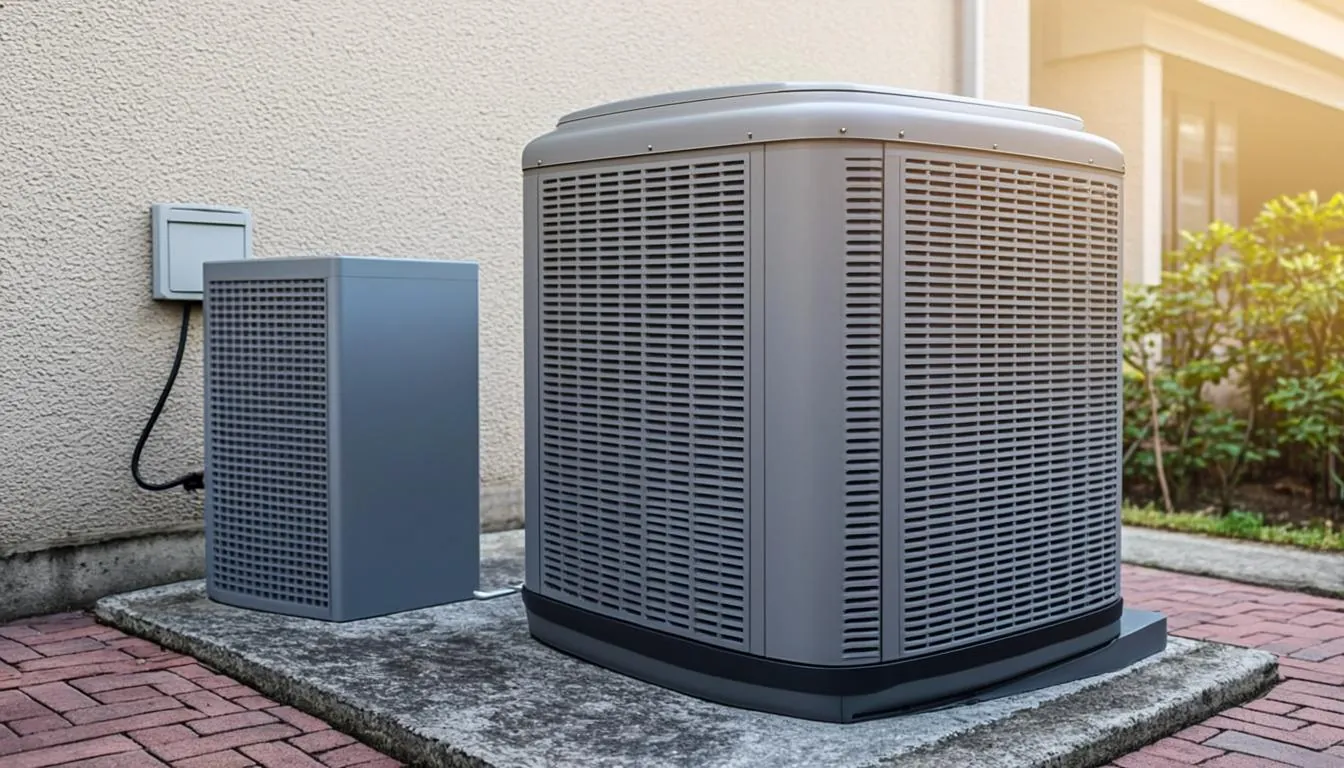
Ask any Florida homeowner what the generator must carry in September and the answer is the same: the air conditioner. The short answer to the question is yes, a standby generator can run central AC, and the honest follow-up is that whether it can run yours depends on numbers that belong in a calculation, not on a rule of thumb about generator size. Here is the arithmetic.
How Much Power Does Central AC Require?
A central AC system's electrical demand concentrates in the outdoor condenser, where the compressor and fan live, plus the air handler indoors. The condenser's running demand scales with the unit's size: larger tonnage, larger compressor, more current. Air handlers add their own fan load, electric heat strips add a great deal more where they exist, and the total is listed on the equipment's nameplate data rather than guessed from the thermostat.
Running Watts vs. Starting Watts of an AC Unit
Every motor has two numbers. Running current is what the compressor draws steadily once spinning. Starting current, often called locked-rotor current, is the brief surge at the moment the compressor energizes, and it can reach several times the running value for a fraction of a second. The generator does not care about averages; it must deliver that instant, because the compressor demands it.
This is the single fact most generator-sizing mistakes ignore. A generator whose capacity covers the running load but not the starting surge will run the house comfortably and then stutter exactly when the AC kicks on.
Why HVAC Compressor Starting Loads Matter
The starting surge arrives at the worst moment: the generator is already carrying refrigeration, lighting, and everything else the household runs, and the thermostat calls for cooling on top of all of it. If the surge exceeds what remains, the generator's protective controls may trip, or the voltage sag may reset electronics. Either way, the household experiences it as "the generator can't handle the AC," when the truth is the calculation skipped the starting number.
Can a 14kW, 18kW or 22kW Generator Support Central AC?
Those three sizes are the common residential range, and the truthful answer for all of them is: it depends on the rest of the load list and the specific AC unit's data. A 14kW unit on a modest home with an efficient smaller AC and a short essential list often carries the system fine. An 18kW or 22kW unit gives more room, enough to cover larger compressors or longer essential lists.
What no honest answer can do is promise that a specific kW always covers a specific tonnage. The condenser's nameplate, the starting current, and everything else running simultaneously decide it. That is why our generator installation service sizes from the equipment data sheet, not from a size chart.
The Role of Soft Starters and Load Management
Two tools shrink the problem when the numbers come out tight. A soft starter, fitted to the condenser, reduces the compressor's starting surge substantially, which can be the difference between a stutter and a smooth start on a mid-size generator. Load management takes the other approach: the transfer system sequences heavy loads so the AC does not start while every other large appliance runs, or sheds deferrable circuits momentarily when the compressor starts.
Used together, they let a smaller generator carry a household that a naive calculation would call too big, which is frequently the most cost-effective outcome on the table.
What Other Appliances Will Run at the Same Time?
The AC never runs alone. The refrigerator cycles, the well or irrigation pump may run, the water heater element may be on, the kitchen is cooking dinner, and the lights are on. The generator question is never "can it run the AC"; it is "can it run the AC while everything else in the household's outage plan is running." The load list captures that reality, which is why the essential-circuits decision and the generator decision are made together, as covered in our guide to whole house versus essential circuit backup.
How to Size a Generator for Your HVAC System
The procedure takes one site visit. Read the condenser's nameplate and the air handler's data. Note the starting current, or plan the soft starter. Build the rest of the outage list with the household. Run the numbers with everything simultaneous and with the management options applied. The result is a specific generator size, or a specific smaller size plus a soft starter, priced both ways.
If your household's September scenario includes a cool bedroom and a running refrigerator, bring us the AC model and the address. The sizing answer arrives in writing, with the starting-surge arithmetic shown, before any equipment is ordered.
Will Your Generator Carry the AC? Let's Do the Math.
Send us the AC model and the outage list. The sizing answer comes back in writing.