Standby Generator Repair: Warning Signs Your Unit Needs Service
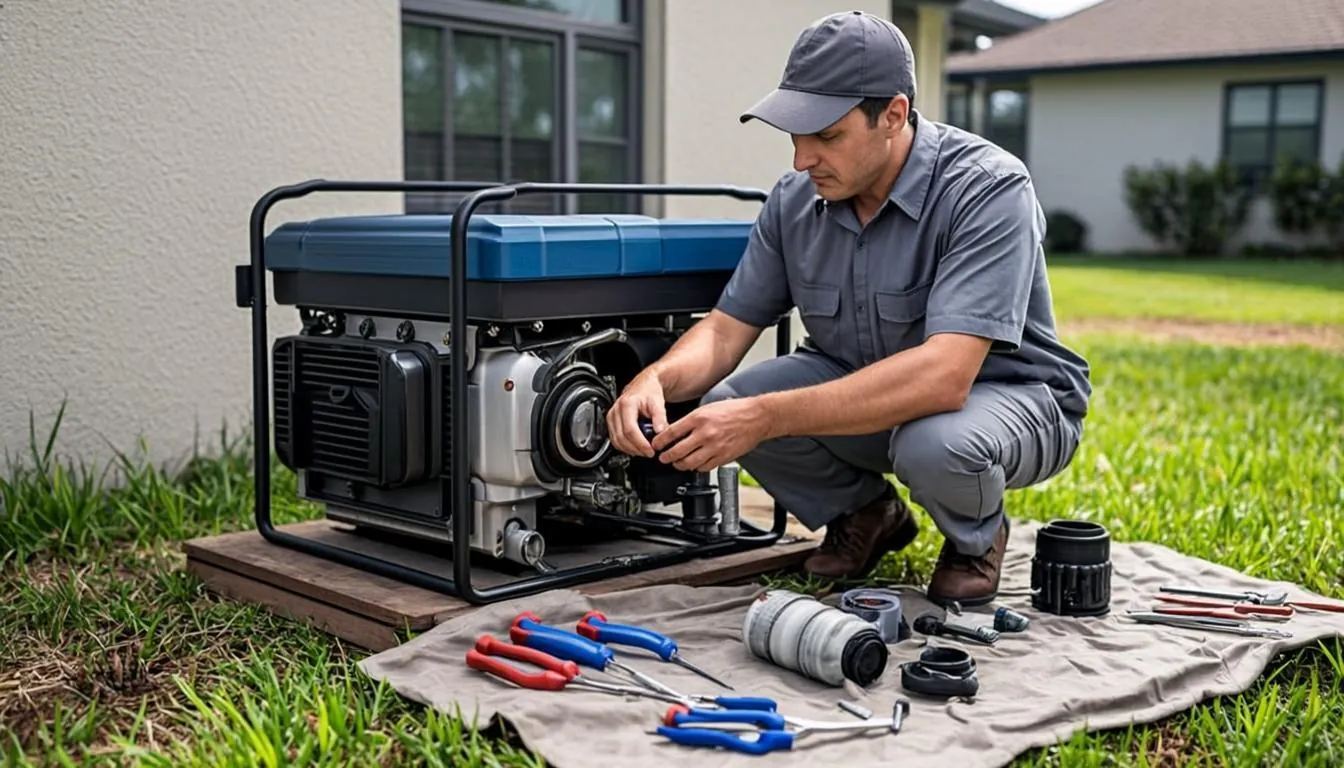
A home standby generator is the rare appliance that diagnoses itself: every week it starts, runs, and shuts down on schedule, and every week that cycle quietly reports the unit's health to anyone paying attention. Most owners are not paying attention until the storm arrives, which is exactly when a small repair becomes a big problem. This guide covers the warning signs a standby unit shows before it fails, what each one usually means, and the maintenance habits that keep the repair conversation short. Whether the eventual service happens through the manufacturer's network or a local contractor, the first step is the same: notice the symptom and write it down.
The Unit Fails or Skips Its Weekly Exercise
The self-test is the unit's own health check, and any deviation is information. A generator that fails to start during exercise, cuts out mid-cycle, or starts producing the wrong sound deserves a look before its next real job. Log what happened, when, and what the controller displayed: modern standby controllers carry event codes that a technician reads like a chart, and a week of accurate notes shortens the diagnostic visit noticeably. A skipped exercise is not an emergency; a unit that will not start is the equipment equivalent of a smoke detector with a dead battery, uncomfortable only because you cannot choose the timing of the fire.
It Runs, but the House Stays on Utility Power
The most confusing failure mode: the generator clearly runs during an outage, yet the lights stay off or the transfer never completes. That pattern lives in the transfer equipment, the switch that moves the house between utility and generator power, not necessarily in the generator itself. The anatomy of the handoff is explained in our guide to what a generator transfer switch does, and the distinction matters because it changes who services what. A unit that exercises but never transfers under a real outage is telling you exactly which half of the system to inspect.
Slow Cranking, Rough Running, and New Sounds
Standby units have a signature rhythm, and owners learn it the way you learn a car's idle. A crank that turns slower than usual, a run that sounds labored, rattling, or rhythmically irregular, are worth a service conversation. Some causes are mundane, aging starting batteries top the list, and some point deeper. Coastal air accelerates corrosion on and around outdoor equipment, so a Fort Pierce unit's sounds and its enclosure condition deserve eyes more often than the manual's minimum, a reality our placement guide builds into the siting conversation from day one.
Fuel, Oil, and Fluid Clues
Puddles on the pad, fuel odor near the enclosure, drip lines under the unit, or repeated low-oil shutdowns are fluid-system signals, and none of them improve with neglect. Propane owners add one more check: the tank gauge, because a unit that ran fine in July can starve in September on a tank nobody refilled, the supply logistics covered in our comparison of natural gas and propane generators. Fluid clues are among the cheapest repairs on this list and among the most expensive to skip.
Shutdowns Under Load
A unit that idles contentedly but shuts down or stumbles when the air conditioner starts is making a load-related complaint, and the pattern repeats identically every time, which is diagnostic gold. The causes range from fuel delivery to capacity mismatches to maintenance debt; the household side of the equation, what the generator is actually being asked to carry when the AC compressor kicks in, is laid out in our guide to standby generators and central AC. Document what was running when it quit: that list and the controller's event code together usually pinpoint the fault.
Corrosion, Rust, and Storm Aftermath
Open the enclosure during a quiet week and look: white corrosion on connections, rust spreading on hardware, salt film on the battery terminals, rodent debris in the airflow path. A named storm adds its own inspection duties, the post-storm discipline covered in our hurricane season generator checklist. Damage found early is a cleaning and a part; damage found at the start of an outage is a dark house and a queue behind every other downed unit in the neighborhood.
Repair vs. Replace: How the Decision Gets Made
When the diagnosis lands, the repair-or-replace conversation weighs four factors. Age against the manufacturer's design life and warranty status. Maintenance history, because a unit with records ages defensibly and one without ages suspiciously. Parts availability for the specific model line. And sizing drift: a household that has grown an EV, a second AC, or a pool since installation may find that its failed unit was undersized anyway, in which case the arithmetic in our generator sizing guide decides the question before sentiment does. Our generator installation service runs that calculation honestly, because replacing a unit that a new load calculation no longer supports is a service, not a sales tactic.
What Routine Maintenance Prevents
The unglamorous truth: most of the failures above are slow-motion versions of skipped maintenance. The interval work in our standby generator maintenance schedule, fluids, filters, connections, battery checks, and the weekly glance at the exercise cycle, prevents the majority of no-start calls, and it costs a fraction of an emergency repair during a storm week. Keep the records with the house's paperwork; the log is the difference between "it made a noise once" and a diagnostic a technician can act on.
Standby Generator Repair Questions
Why does my standby generator shut off when the air conditioner starts?
A shutdown or stumble tied to a specific large load points to a fuel-delivery, capacity, or maintenance issue rather than a random fault. Note what was running when it quit and any controller event code; the pattern plus the load list usually isolates the cause for the technician.
How often should a home standby generator be serviced?
Follow the manufacturer's interval for fluids, filters, and inspection, and treat the weekly exercise cycle as a standing health check between visits. Units in coastal air deserve closer enclosure and connection checks. Our maintenance schedule guide collects the habits in one place.
Can I troubleshoot my own standby generator?
Safe owner checks are observational: watch the exercise cycle, listen, look for leaks or corrosion, and read the controller's event codes. Leave internal electrical and fuel work to qualified service technicians, generator equipment combines voltage, fuel, and moving parts in ways that punish improvisation.
Replacing an Aging or Undersized Unit?
We run the new load calculation first, then install to it, permits and coordination included.