Generac Home Standby Generators: A Fort Pierce Buyer's Guide
Search data makes one thing obvious: when Treasure Coast homeowners start thinking about backup power, most of them type "Generac" first. The brand has become the default shorthand for home standby, the way people ask for a tissue instead of a paper napkin. But a generator purchase is a fifteen-year commitment bolted to the side of your house, and the brand name is only one line of the decision. This guide covers what a Generac home standby system actually is, what installation looks like in Fort Pierce, and the questions that decide whether the equipment fits your home, because our advice has always been brand-neutral: the sizing math matters more than the label on the cabinet.
What Is a Generac Home Standby Generator?
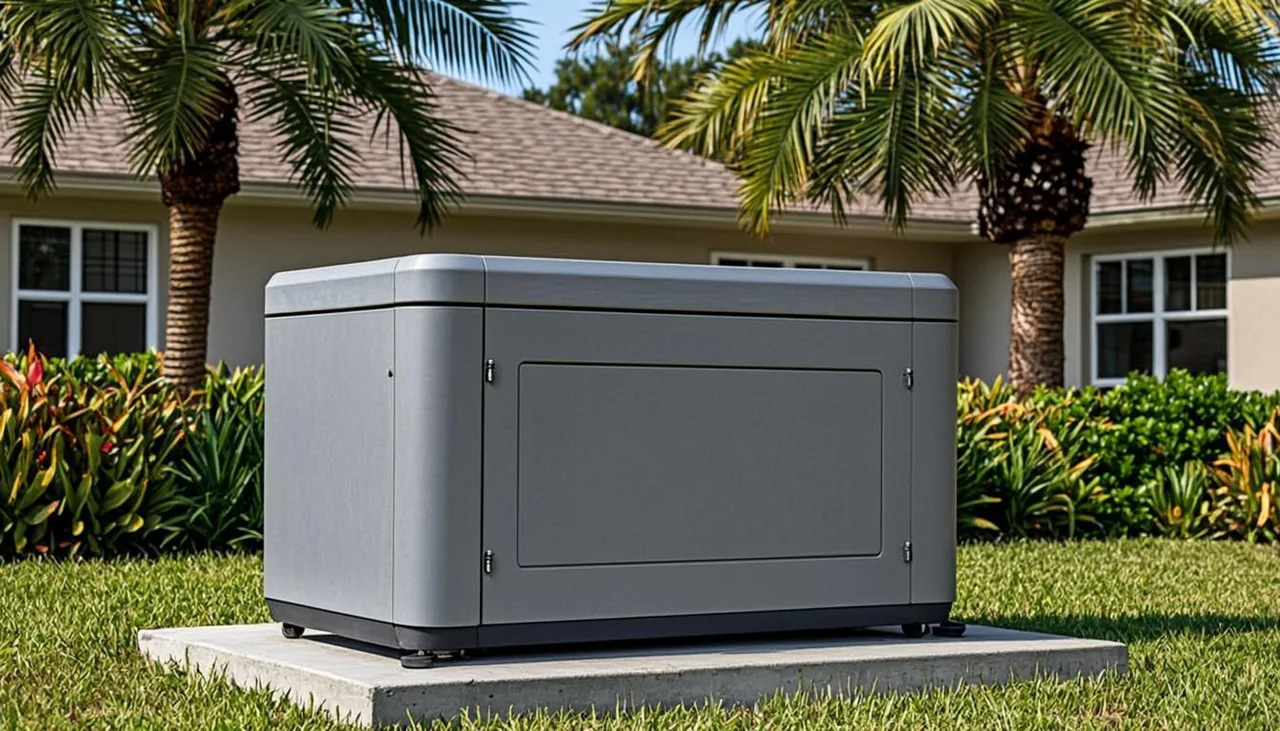
Generac is one of the most widely recognized home standby generator brands in the United States, and the product category it is best known for shares the same anatomy regardless of manufacturer. A standby generator is a permanently installed unit, set on a pad outside the house, connected to the home's electrical system through a transfer switch and to a fuel supply, either the natural gas line or a propane tank. When the utility power drops, the system starts itself, transfers the house's protected circuits onto generator power, and runs unattended. It also runs a short self-test cycle on a schedule, typically weekly, which quietly doubles as the unit's own health check.
Those category traits, not brand-specific claims, are what matter for the permit, the placement, and the electrical connection. The manufacturer's specification sheets describe the details for the exact model; the installation process around it is the same discipline covered in our guide to Fort Pierce generator permits.
Start With the Load Calculation, Not the Brand
The most common Generac mistake happens before anyone touches equipment: buying a size based on the neighbor's unit, a magazine ad, or a round number that sounded good. The right size comes from the house, not the catalog. A load calculation totals the circuits the household actually needs during an outage, applies demand factors for loads that never peak together, and produces the capacity number the equipment must meet. We walk through that method in our guides to generator sizing and load calculations and panel size.
Sizing first also protects the budget: an oversized unit costs more to buy and more to feed, and an undersized one sheds loads at the worst moment. Both failure modes are avoidable with a calculation that takes an hour.
Air-Cooled vs. Liquid-Cooled: The Two Equipment Classes
Home standby equipment generally splits into two classes. Smaller air-cooled units, the class most single-family homes land in, handle a typical household's essential loads and moderate whole-house coverage. Larger liquid-cooled units serve big homes, heavy mechanical loads, and properties that expect near-total coverage. The class affects more than capacity: enclosure size, sound profile, and the site work around the pad all move with it. Which class fits is a load-calculation outcome, and the honest answer for many Fort Pierce homes is that a well-chosen air-cooled unit covers what the household actually needs during an outage.
Fuel: Natural Gas vs. Propane
Standby units run on utility natural gas or liquid propane, and the fuel decision shapes the project. Gas-fired installations tie into the home's gas supply, where one exists and the utility's requirements allow it. Propane installations add a tank to the site plan, with its placement, clearances, and refill logistics drawn alongside everything else. The trade-offs between the two, supply behavior during storms, tank ownership, and maintenance differences, are laid out in our comparison of natural gas and propane generators.
The Transfer Switch Pairing
The generator is half the system; the transfer equipment is the other half. An automatic transfer switch detects the outage and moves the house onto generator power without anyone stepping outside, which is why standby systems pair with them so naturally. Where a project uses an interlock instead, startup becomes a short manual sequence. The difference in cost and daily experience is real, and we break it down in our guide to interlock kits versus transfer switches. Whatever the pairing, Fort Pierce permits will document it: the city's generator checklist asks for the electrical diagram showing exactly how the unit connects.
What Installation Involves in Fort Pierce
A standby installation is a construction project, not a delivery. The site evaluation settles placement, distances from openings and property lines, and pad location; IRC guidance used in our region places generators a minimum of five feet from windows, doors, and air intakes, and flood-zone parcels carry elevation requirements above base flood elevation. The permit package assembles the survey, the electrical diagram, the load sizing, and the slab drawing, a sequence covered in our generator permit guide. Fuel piping, utility coordination, and inspections complete the sequence. Where the service entrance is touched and the address sits in FPUA territory, the utility's underground policy joins the timeline as well.
Vetting a Generator Installer
Whatever brand a homeowner settles on, the installer matters as much as the equipment. Three checks separate the serious bids from the rest. First, license: Florida consumers can verify an electrical contractor's license status through the state DBPR license portal, and the contractor's registration with the local building department follows from it. Second, scope: an itemized estimate names the equipment, the transfer method, the pad and site work, the permit handling, and the inspection sequence, the same line items our guide to generator cost factors walks through. Third, process: the sizing calculation should appear in the paperwork, not just the sales talk. Our generator installation service runs all three by default, and we match equipment lines to the load profile rather than leading with a brand.
Warranty and Service Questions Worth Asking
Before signing anything, ask how warranty service is delivered for the specific model: who performs it, how it is scheduled, and what the owner is responsible for between service visits. Ask for the maintenance interval the manufacturer expects, and compare it with the habits in our standby generator maintenance schedule. Units that exercise weekly and get their fluids and filters looked after rarely surprise their owners; units that wait for a named storm to get attention sometimes do not start for it.
The bottom line: Generac's popularity reflects a real product category that works well in Florida when it is sized, sited, and connected correctly. Start with the calculation, hold the bid to the checklist above, and the brand question answers itself.
Generac and Home Standby Questions
Is Generac the best generator brand for Florida homes?
No single brand is automatically the best fit; sizing, fuel arrangement, and service support decide the outcome. Generac is a widely installed and recognized option, and other manufacturers compete in the same classes. Compare equipment on the load calculation, the warranty terms, and the installer's scope rather than the nameplate.
How long can a home standby generator run during an outage?
Standby units are designed for extended, unattended operation on their fuel supply. On natural gas the run is limited by maintenance intervals rather than fuel; on propane, tank capacity and refill logistics set the ceiling. Follow the manufacturer's operating guidance and keep the maintenance schedule current for long storm-season outages.
Do I need a permit to install a standby generator in Fort Pierce?
Yes. Generator installations are permitted and inspected projects in the City of Fort Pierce, with a specific checklist covering the survey, electrical diagram, load sizing, and slab drawing. See our guide to Fort Pierce generator permit requirements for the package, item by item.
Sizing a Home Standby Generator?
We run the load calculation first and match equipment to it, brand-neutral, with permits handled as part of the project.