Ceiling Fan Installation and Repair: When to Bring In an Electrician
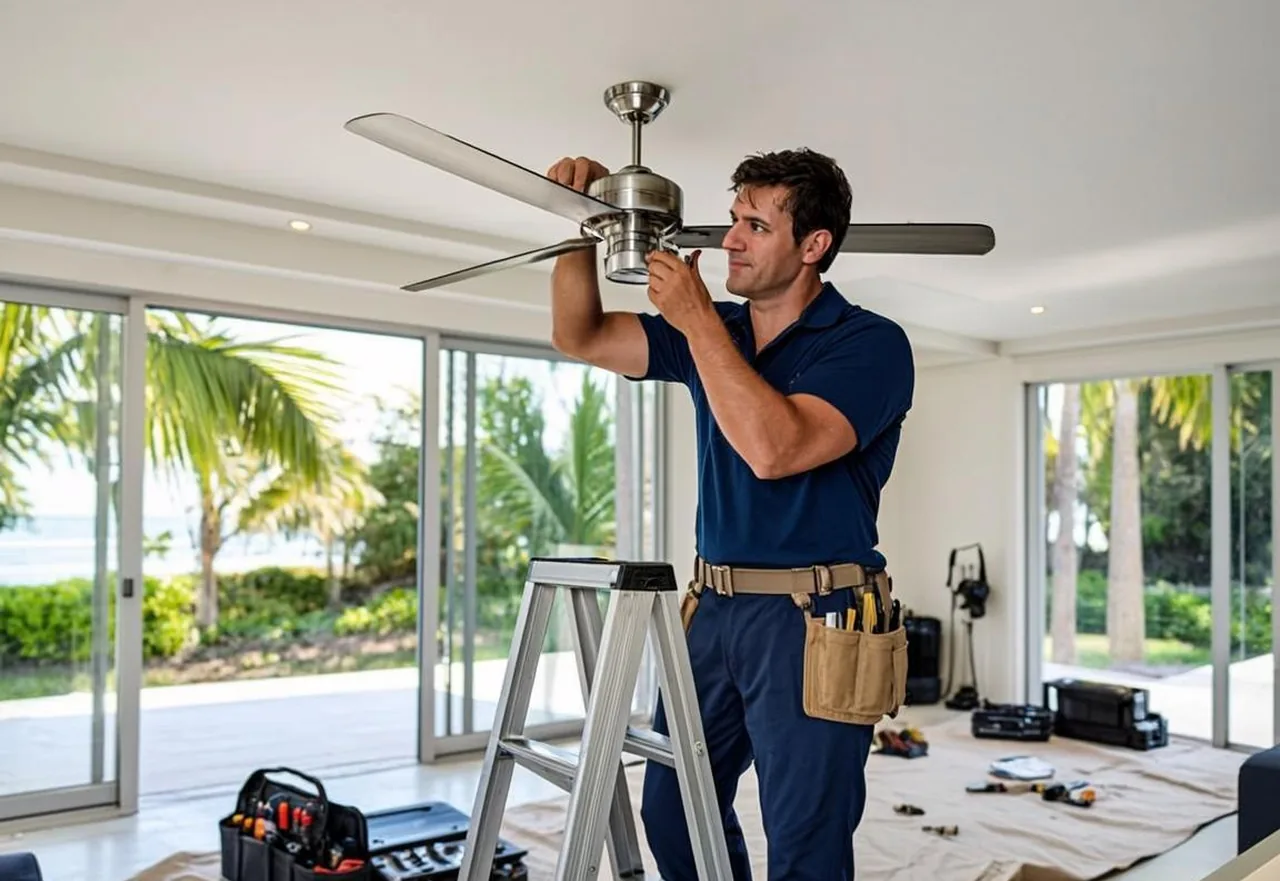
A ceiling fan looks like a weekend project, and half of one is: the blades, the balancing, the instructions written in small print. The other half hangs above your head and predates the fan: the electrical box, the brace, the wiring, and the switch legs that decide whether the light and the fan operate independently. That half is where our crew gets called, both for installations that should have started with an electrician and for fans that have behaved badly ever since they went up.
What a Real Installation Involves
A fan is a rotating mass suspended from your ceiling, and the box behind it carries that load every hour the fan runs. Fan-rated boxes and proper bracing are the difference between a fan that runs silent for twenty years and one that works the ceiling loose. The electrical side adds its own decisions: whether the existing wiring supports separate control of the fan and the light, whether wall switches or remotes will operate it, and whether the circuit feeding the room has capacity for the motor's draw alongside everything else on it.
In older Fort Pierce homes, the box situation is the usual surprise. A house wired for a simple light fixture in 1970 often has a plastic or steel box that was never rated for fan loads, and the wiring may have no separate conductor for a light kit. Correcting that before the fan goes up is a small piece of electrical work; discovering it after the fan starts swinging is a bigger one.
Why Fans Wobble, Hum, and Die
Most fan complaints sort into a short list. Wobble comes from mounting: a box that is not fan-rated, blades that were never balanced, or a downrod connection that has worked loose. A hum that follows the motor usually comes from a dimmer controlling a motor, a mismatch we see constantly; fan motors want clean full-voltage power, and dimmers deliver anything but. Intermittent operation, where the fan runs and the light does not or vice versa, points at wiring connections or a failed pull-chain or receiver module. And a fan that hums but barely turns may be telling you its capacitor is failing.
Each of those has a different repair, and the first diagnostic step is deciding whether the fault is the fan or the wiring feeding it. That decision is exactly what an electrician's visit settles.
Outdoor Fans: Wet-Rated or Damp-Rated, Not Optional
Florida lanais, porches, and covered patios all want moving air, and the fans sold for those spaces come with ratings that matter more here than almost anywhere. Damp-rated fans suit covered locations that never get direct rain; wet-rated fans are built to be rained on directly. Installing a standard indoor fan over a lanai is a short-lived decision on this coast: humidity finds the motor, salt air finds the connections, and the first summer storm finds everything else. Outdoor fan installations also tend to need new wiring run to spaces that never had it, which is electrician territory from the first hour.
When the Problem Is Bigger Than the Fan
Some fan symptoms are the visible end of a wiring problem elsewhere. A fan that dims the room lights when it starts is reporting a shared circuit carrying more than it should. A fan that trips the breaker is reporting a fault the breaker is correctly catching. Repeated failures of the same fixture position can trace back to damaged wiring in the ceiling cavity. In those cases the fan gets fixed the day the circuit does, which is why fan visits belong with electrical repair rather than handyman work.
If your fan conversation turns into a circuit conversation, our electrical repair page covers how we run those diagnoses, and our guide on why breakers trip explains what the breaker is protecting when it interrupts a fan circuit.
Ceiling Fan FAQs
Can any ceiling electrical box hold a fan?
No. Fans need boxes and bracing rated for the rotating load. A standard light-fixture box is not built for it, and installing a fan on one is the most common cause of the wobble and loosening we get repair calls about.
Why does my ceiling fan hum or buzz?
Usually because a dimmer is controlling the motor. Fan motors want full, clean voltage. Replacing the dimmer with a fan-rated control, or separate fan and light controls, usually removes the hum.
What size ceiling fan fits my room?
Blade span should match room size, roughly 44 inches for a small bedroom and 52 to 56 inches for larger living spaces. Ceiling height and mounting type decide the downrod more than the room does.
Do outdoor lanai fans need special ratings?
Yes. Damp-rated fans for covered spaces that stay dry, wet-rated fans anywhere rain reaches them directly. Indoor fans over a Florida lanai do not survive the humidity and storms for long.
Installing, Replacing, or Troubleshooting a Fan?
We do the electrical half of ceiling fan work: rated boxes, correct wiring, and circuits that hold up.