Can a Pool Pump or New HVAC System Overload Your Electrical Panel?
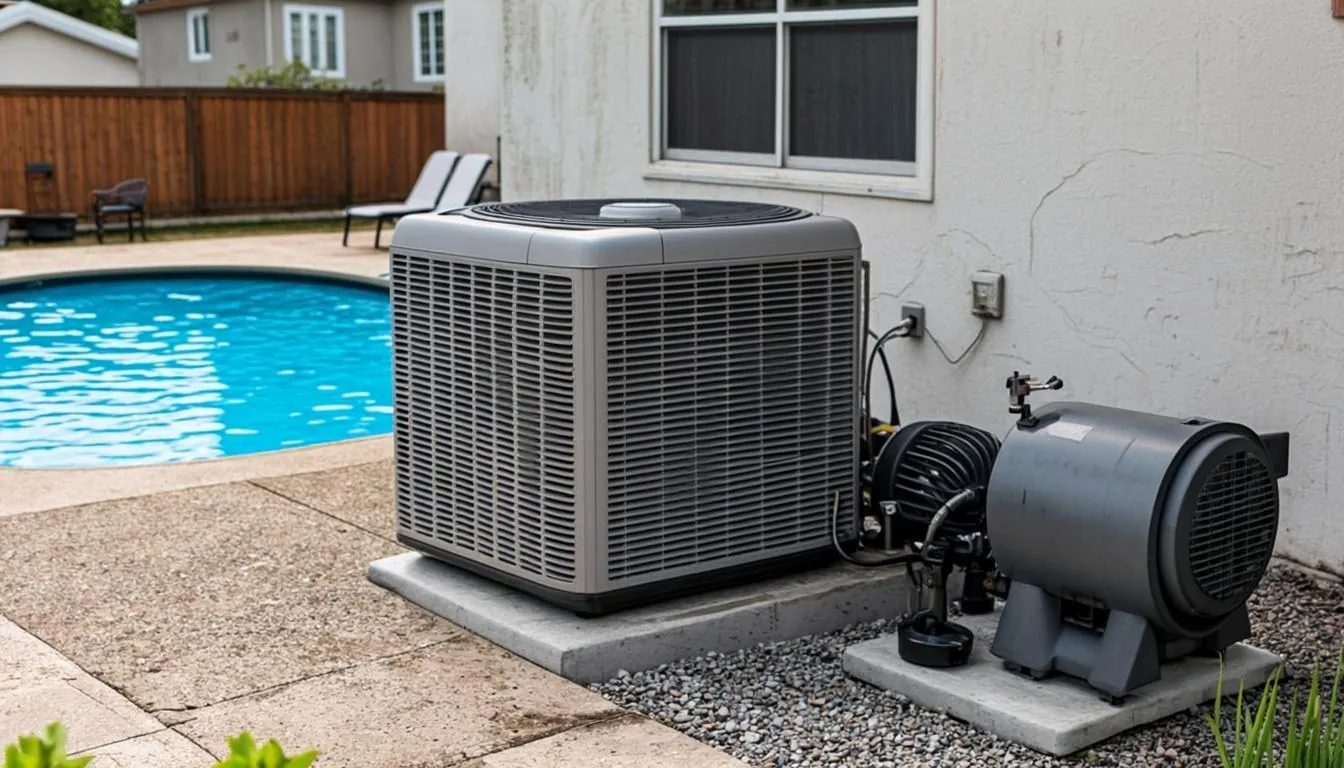
Florida homes run equipment the rest of the country only reads about: central air most of the year, pool pumps every day, irrigation pumps on timers. Each addition is reasonable on its own, and together they raise a question worth asking before the next one: can the panel actually carry all of this? The honest answer is that pools and HVAC do overload panels, some panels, in some combinations, and the calculation is what separates the real risk from the imagined one.
How Pool Pumps Affect Household Electrical Demand
A pool pump is a motor running on a schedule, and modern variable-speed pumps have softened its appetite considerably compared to the single-speed units of previous decades. Still, it runs for hours daily, its circuit is dedicated, and it joins every other motor in the house in the load calculation. Where a pool adds a heater, an automation system, or a spa blower, the pool's total footprint grows well beyond the pump itself.
How Central Air Conditioning Affects Electrical Loads
Central AC is usually the largest single load in a Florida home. The condenser draws steadily across the hottest hours of the day, exactly when other loads, refrigeration, cooking, laundry, also run, and the air handler adds its own draw indoors. Replacing an aging AC with a larger or two-stage system, or adding a second system for an addition, changes the calculation materially.
Starting Loads vs. Running Loads
Both pool pumps and AC compressors are motors, and motors start harder than they run. The compressor's starting surge can reach several times its running current for a fraction of a second each time the thermostat calls for cooling; the pool pump's start is gentler on variable-speed units but still a transient. The panel experiences these transients every cycle, and a service already near its ceiling shows them as dimming lights, tripped main breakers, or nuisance trips on the motor's circuit.
What Happens When Several Large Appliances Operate Together?
The overload scenario is never one appliance; it is the overlap. The AC runs all afternoon, the pool pump starts on its timer at four, the dryer starts at five, dinner cooking at six, and the panel sits at its ceiling while all of them run. A service with headroom shrugs; a marginal service trips the main breaker; a service whose protection is overdue for attention may let a connection run hot instead of tripping. Overlap, not individual size, is the thing the load calculation exists to measure.
Dedicated Circuits and Equipment Requirements
Pool pumps, AC condensers, and air handlers each belong on their own dedicated circuit, sized to the equipment's data and protected appropriately. Equipment installs that cheat, sharing circuits, undersized conductors, missing disconnects, are where many real problems begin. The circuit work and the panel's capacity are two halves of the same project, and both belong in the permit.
How to Assess Existing Panel Capacity
The assessment is the load calculation described in our guide to electrical load calculations: the household's demand, itemized, with demand factors applied and the new equipment entered at its rated draw. The result compares against the main breaker's rating, and the margin, or the lack of it, becomes visible as a number rather than a feeling.
When to Consider an Electrical Panel Upgrade
The upgrade earns its place in three situations: the calculation already exceeds the rating with current equipment; the calculation fits today but the planned additions, the pool, the second HVAC system, push past it; or the panel's condition, age, corrosion, obsolete parts, makes adding load to it unwise regardless of the arithmetic. Note what is not on the list: adding a pool or an AC does not automatically require an upgrade. Many homes absorb both inside their existing service, and the ones that cannot are identified by calculation, not by equipment fear.
Planning either addition in Fort Pierce or the surrounding communities? Send us the equipment and the address, and the calculation answer arrives before the installer's truck does.
Adding a Pool or a New AC This Season?
We run the load calculation first, so the equipment lands on a panel that can carry it.