Whole House Surge Protector: Is It Worth It in Florida?
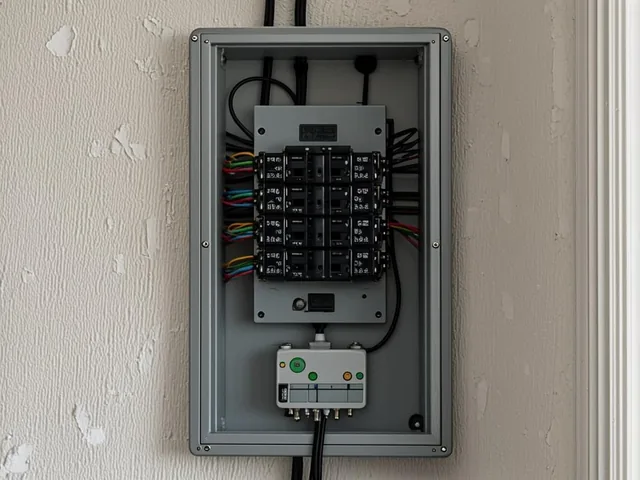
Most homeowners meet surge protection at the power strip: a crowded outlet behind the TV with a clunky plug. A whole house surge protector works at a different altitude entirely. Installed at the electrical panel, it intercepts voltage spikes the moment they arrive at the service, before they spread to every circuit in the house. For Florida homes, with our storm profile and the electronics packed into a modern household, the question is less whether the device is worth it and more when the right moment to install it arrives. Here is the full picture.
What a Whole House Surge Protector Actually Does
A whole house surge protector, the panel-mounted devices pros call Type 1 or Type 2 surge protective devices, sits at the front door of the electrical system. When voltage on the service spikes above safe levels, from utility switching, from a nearby lightning strike on the grid, or from large equipment cycling in the neighborhood, the device diverts the excess energy to ground in a fraction of a moment, clamping the voltage the house's circuits actually see. Strip protectors only guard whatever is plugged into them; the whole house unit guards everything at once, including the hard-wired loads a strip can never reach: the air conditioner, the well pump, the pool equipment, the EV charger.
Why Florida Homes Face More Surge Exposure
Florida sits among the most lightning-active states in the country, and the National Lightning Safety Council has long credited the state with more lightning fatalities than any other. Every summer storm is a reminder that the grid here absorbs strikes on lines, transformers, and substations, and each event sends disturbances down the wires toward every service attached to them. Layer on hurricane season, where outages and their restorations produce their own switching surges, and the case for panel-level protection stops being theoretical. The device also works quietly on ordinary days, absorbing the small daily spikes that slowly age electronics.
The Code Requirement Behind New Service Work
Surge protection moved from optional to expected in recent code cycles: the 2020 edition of the National Electrical Code added requirements for surge protective devices on services supplying dwelling units, and it extends to service equipment replacements, meaning a panel replacement is precisely when the requirement most often applies. Enforcement depends on the code edition and amendments your building department enforces, which is why the permit path matters: our guide to the electrical permit for panel upgrades in Fort Pierce explains how scope is documented and inspected. If your jurisdiction enforces a cycle that includes the surge provision, the panel project and the surge device arrive together.
What Whole House Protection Does and Does Not Cover
What It Covers
The device addresses surges arriving through the service, the most common path into the home's electronics. Everything downstream benefits: appliances, HVAC control boards, televisions, computers, and the increasingly computerized equipment inside modern appliances that fails expensively and invisibly.
What It Cannot Do
No panel device guarantees protection against a direct lightning strike on the structure; the energy involved is beyond what any residential device is expected to absorb, and that scenario is a whole-fire-safety conversation, not an electronics one. Protection is layered, not absolute, which is why pros treat the panel device as the foundation rather than the whole answer.
The Point-of-Use Layer
Sensitive electronics still justify their own layer: a quality strip protector, or better, an uninterruptible supply for computers and network gear, handles what remains after the panel device clamps the big events. The two layers are cheap insurance together, and neither replaces the other.
The Right Moment Is a Panel Upgrade
The economics of whole house surge protection improve dramatically when the panel is already open. The device mounts at the service equipment, needs a breaker space, and ties into grounding that a panel upgrade brings up to standard anyway. Homeowners planning a panel upgrade should price the surge device into the same project, where the labor overlap is nearly total; the standalone retrofit is the same hardware with its own visit and its own permit scope. Homes with the symptoms in our guide to panel warning signs usually have both conversations at once.
Installation, Lifespan, and Maintenance
Installation is an electrical-permit affair: the device is wired at the service equipment with its own breaker, the grounding path is verified, and the inspection closes the loop. Units sacrifice themselves absorbing energy, so they wear: many carry status indicators, and the manufacturer's guidance gives expected service life. After major storm events, a quick visual check of the indicator is a reasonable habit, and a device that has taken a heavy hit is replaced, not trusted. The check takes seconds and fits naturally beside the habits in our guide to breakers that won't reset.
Verdict: for a Florida home, a whole house surge protector is one of the highest-value additions to a service, and the cheapest moment to add it is during work the panel already needed. Bring the question to the estimate, and the device joins the permit instead of chasing it.
Whole House Surge Protection Questions
Does a whole house surge protector protect against a direct lightning strike?
No residential device is built to absorb the full energy of a direct strike on the structure. Panel-level surge protection addresses surges arriving through the utility service, including disturbances from strikes on the grid, and layers with point-of-use devices for sensitive electronics.
Where is a whole house surge protector installed?
At or immediately beside the main service panel, wired with its own dedicated breaker into the service equipment. The placement is why the device pairs so naturally with a panel upgrade: the same visit, the same permit scope, and the same grounding verification cover both.
Do surge protection strips still matter with a whole house unit?
Yes. The panel device clamps the large surges at the service, and quality point-of-use protection adds a second layer for computers, network gear, and AV equipment. The two work together; neither makes the other redundant.
Planning a Panel Upgrade? Add Surge Protection to the Same Project.
The device mounts at the service equipment, so the overlap with a panel upgrade is nearly total labor-wise.