Does Installing an EV Charger Require an Electrical Panel Upgrade?
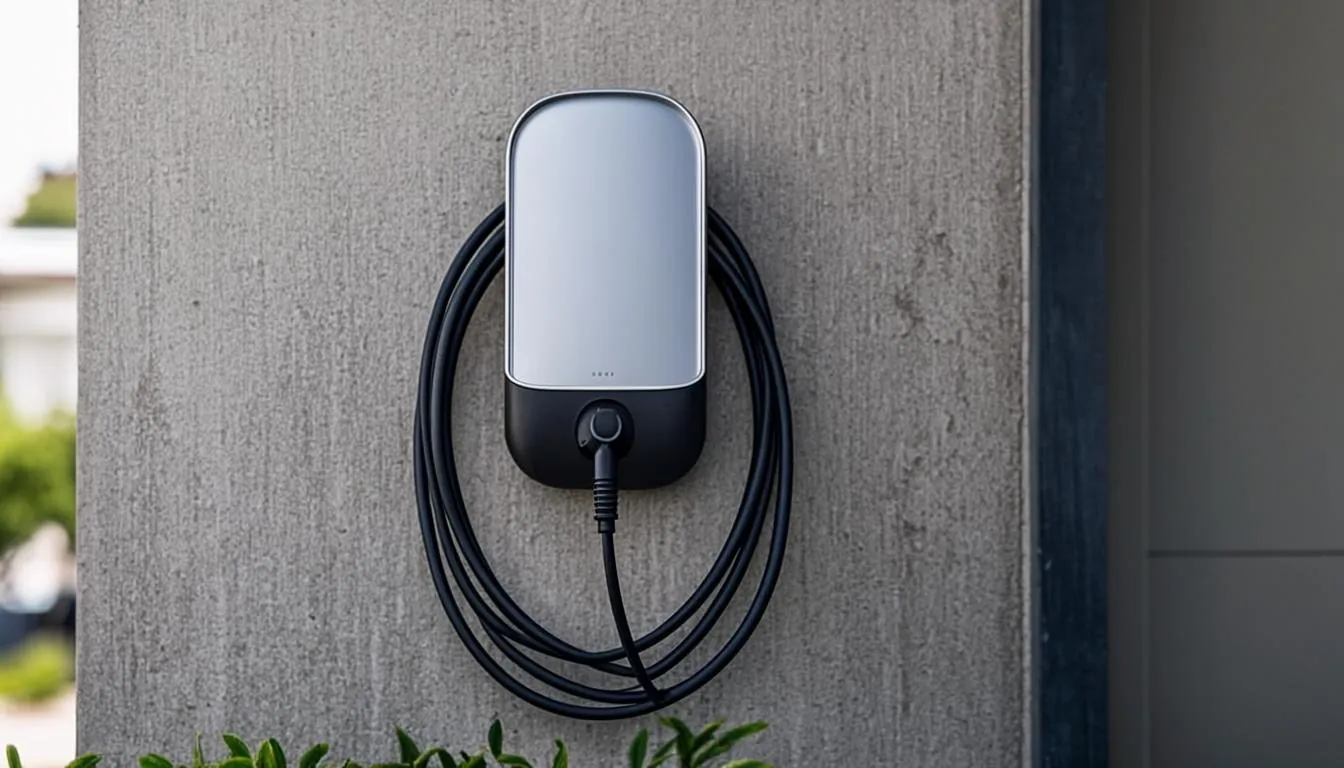
The EV is the largest new appliance most households will ever plug in, and it arrives attached to a question nobody considered at the dealership: can the panel carry it? The answer is genuinely case-by-case, and this guide explains how to get to yours before the charger is purchased.
How Much Electrical Capacity Does a Level 2 Charger Need?
Level 2 home charging runs on a 240-volt circuit, with breakers commonly sized between 40 and 60 amps, and the charger draws continuously at its rating for hours at a time, usually overnight. That combination, high amperage plus continuous duration, is what makes the EV unique in a household's load profile. Almost nothing else in the home runs flat-out for that long.
The circuit itself is straightforward work. The question is what happens at the panel when that continuous draw joins everything else the house runs.
Can a 100 Amp Panel Support an EV Charger?
Sometimes. A 100 amp service in a house with gas heat, gas water heating, and a modest appliance list may hold real headroom, and a charger fits inside it. The same 100 amp service in an all-electric home with central AC, an electric water heater, and a dryer may already sit close to its ceiling, and the charger becomes the straw that breaks the main breaker's patience.
The panel's rating alone decides nothing either way. The load calculation, run with the charger included, is the only instrument that answers it, a point NREL's home-charging guidance emphasizes as well: capacity cannot be concluded from the service rating or the number of open slots alone.
Can a 200 Amp Panel Support an EV Charger?
Almost always comfortably, which is part of why 200 amps is the modern standard. A 200 amp service has the headroom to absorb a 40 to 60 amp continuous load along with central AC, appliances, and everything else, in nearly all residential configurations. Where a 200 amp panel still struggles, the culprit is usually an unusually large appliance list or a very high-amperage charger, and load management solves it.
Dedicated Circuits and EV Charging Loads
EV charging belongs on its own dedicated circuit, shared with nothing. The continuous-load nature of charging is why: circuit design for continuous loads applies derating to the breaker's rating, so a 48 amp charger wants a 60 amp breaker on wire rated for the continuous duty, not a coincidence of convenient parts. The dedicated circuit also isolates charging faults from the rest of the household.
When Is an Electrical Service Upgrade Necessary?
The upgrade conversation starts when the load calculation, run with the charger included, exceeds the current service rating. Typical triggering profiles: 100 amp all-electric homes, homes with an existing heavy appliance list, and households adding both a charger and another large appliance in the same season. In those cases the upgrade, usually to 200 amps, is the durable answer, and it is exactly the scope our panel upgrade service handles, calculation, permit, and utility coordination included.
Can Load Management Avoid a Full Panel Upgrade?
Often yes, and the savings are real. Two tools exist. First, charger amperage adjustment: many Level 2 units let the installer set the charger's draw below its maximum, say 32 amps instead of 48, at the cost of slower charging. Second, dynamic load management equipment, which monitors the panel's real usage and throttles charging when household demand peaks, giving the charger the idle capacity instead of demanding new headroom.
For households that charge overnight and park the second car's question for later, managed charging at reduced amperage frequently turns an upgrade into a non-event. The trade is charging speed versus construction scope, and the calculation shows which trade makes sense.
Steps Before Installing a Home EV Charger
The sequence that avoids surprises: pick the vehicle and the charging habit, daily full charges versus top-ups, because the habit sizes the amperage; get the panel evaluated with the charger's draw included in the calculation; choose the outcome the numbers support, plain circuit, managed charging, or service upgrade; and permit the work, because charger installations are permit-and-inspection work in every jurisdiction we serve.
Bring us the vehicle model and the panel's history, and the evaluation takes one visit: the calculation runs with the charger included, and the recommendation, circuit, managed, or upgrade, arrives in writing with the reasoning shown.
Getting the EV Before the Panel Is Ready?
One evaluation visit tells you whether you need a circuit, management, or an upgrade.